QUICK ANSWER
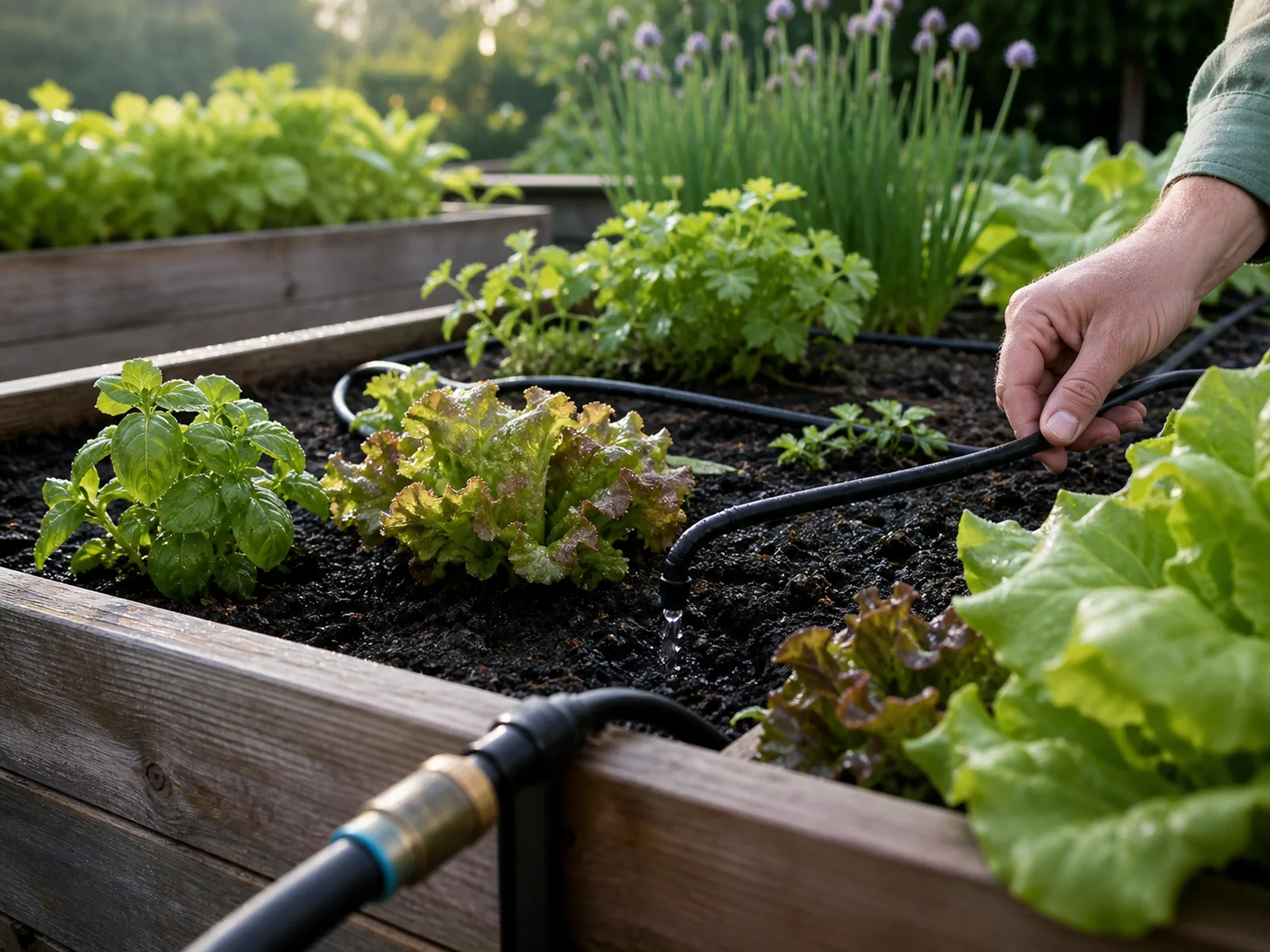
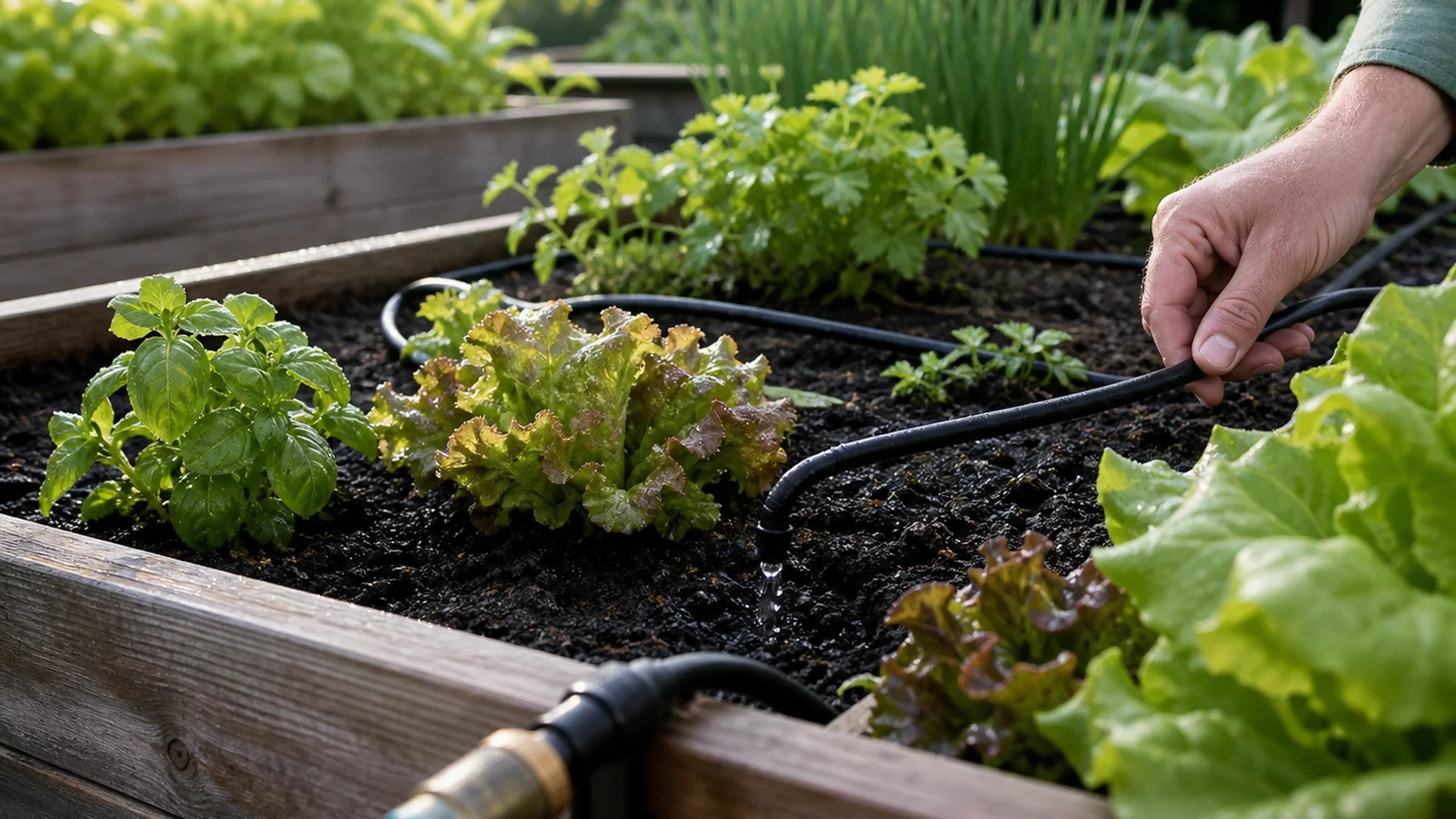
For many raised beds, a simple drip layout offers targeted, adjustable watering with less evaporation than broad sprays. The right system still depends on source water, layout and how closely you can monitor it.
START WITH THE GARDEN YOU HAVE
Begin with the conditions, then choose the method.
Compare practical watering approaches by garden size, plant spacing, water pressure and how much routine you want to automate. The useful next step is to observe the site and define what success looks like before changing materials, equipment or routine. Small, repeatable adjustments are usually easier to learn from than a complete reset.
Use this guide as a framework, not a rigid rule. Climate, soil, plant variety and the way you use your outdoor space all shape the best answer.
PRACTICAL CONSIDERATIONS
What to pay attention to.
- Map bed rows, emitters and hose paths before buying components.
- Check pressure requirements and whether filtration or regulation is needed.
- Use automation as a consistency tool, not a substitute for observation.
COMMON MISTAKES
Keep the process simple enough to adjust.
A garden does not need a perfect system to improve. These are the patterns most likely to make the work harder or obscure the real cause of a problem.
- Buying a kit before measuring beds and water source.
- Using a timer with no seasonal adjustment.
- Forgetting access for repairs or seasonal changes.
EDITORIAL NOTE
We publish product coverage as research-led guidance. Unless a page specifically states otherwise, descriptions are based on published specifications, intended use, manufacturer documentation and reputable third-party information—not fabricated hands-on testing.
Read our review approach